

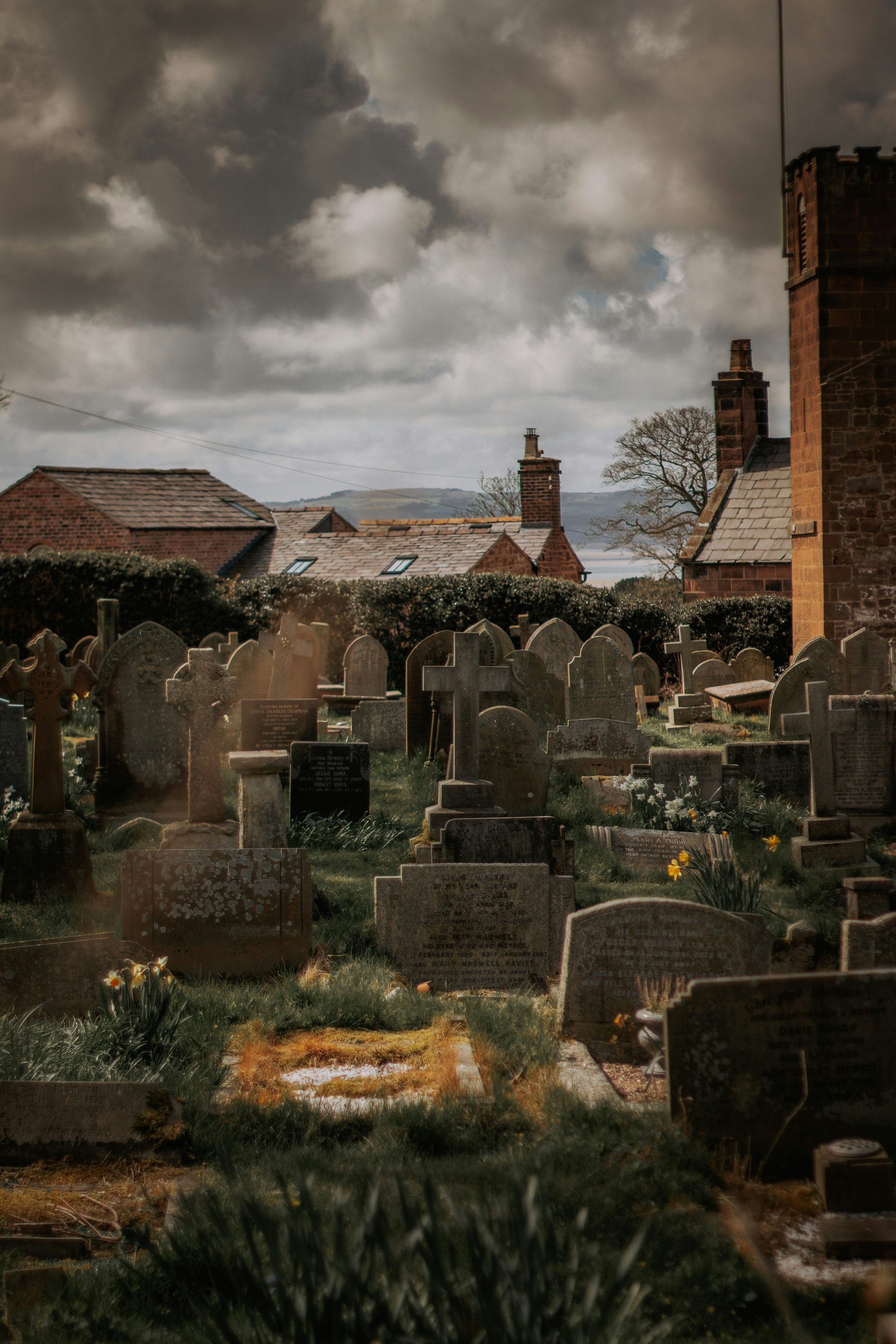
In my neighborhood these last few weeks, spooky skeletons and evil mechanical clowns appeared on front lawns. You know the ones. This week, for one night here in the United States, children of all ages will dress up in costumes and go door-to-door collecting candy from our neighbors.
These costumes and decorations represent a cultural phenomenon present in many spiritual and religious traditions--why do so many devote time to the dead? Is it about fear, truth, remembrance, paying homage to our ancestors, perceived spiritual obligation, or perhaps consideration of the afterlife? This time of year is particularly potent for these contemplations, and October 31 through November 2 marks a particularly rich liminal moment.
Three traditions stand out during this time of year in the United States.
First, Celtic and contemporary Pagan traditions celebrate Samhain, an ancient Gaelic festival marking the transition into winter, and, in later accounts of Pagan practice, a thinning of the boundary between the living and the dead. Seasonal darkening and the end of harvest mark the Earth’s cycle in the northern hemisphere. These give way to contemplation of our own morality and our spiritual connection to the Earth and our ancestors.
Next, Christian traditions recognize November 1 as All Saints' Day and November 2 as All Souls' Day, a formal recognition of the saints and those who have faithfully departed in the Catholic tradition and many Protestant traditions.
Dr. Eric Smith, Associate Professor of Early Christian Texts and Traditions at Iliff School of Theology describes in more detail: “Some will celebrate them separately and others will celebrate them together; the difference often depends on the tradition’s degrees of separation from the Catholic tradition. While All Saints’ Day honors canonized saints and All Souls’ Day honors all the dead, many traditions on the lower-church end of Protestantism conflate the two, and remember all those who have passed away—saints or not—in one remembrance, which is often called All Saints’ Day.”
The celebrations are ritualized with cemetery visits, worship services/mass, candle offerings, and taking time for remembrance. The Christian tradition names “All Hallow’s Eve” for the night before All Saints' Day, which is from where the “Halloween” moniker comes.
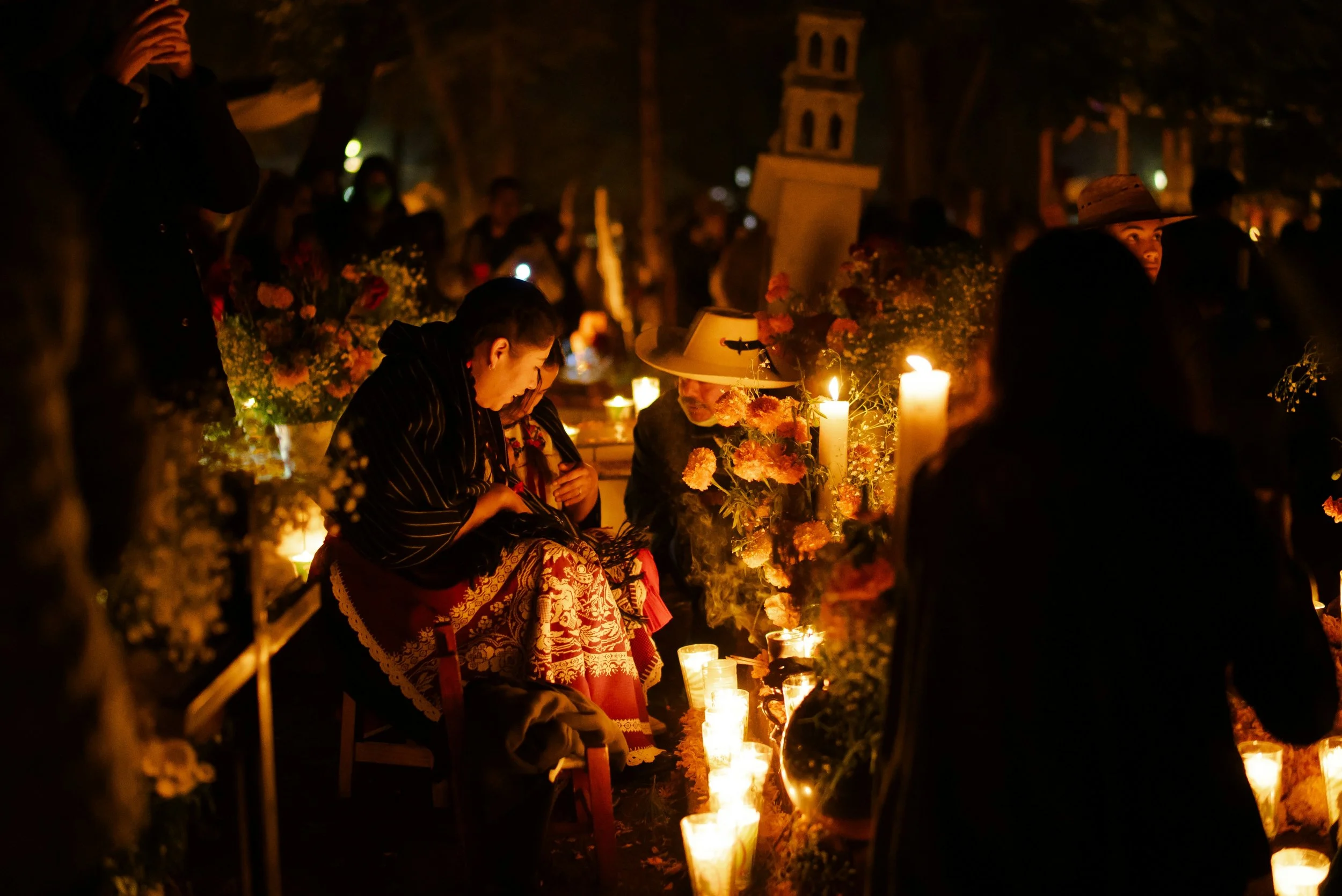
This three day liminal period is observed in Mexican and Mexican American traditions as Día de Muertos, Day of the Dead, where families remember and welcome deceased loved ones, often celebrating bonds continuing across generations, by creating ofrendas (Eng. altars) filled with marigolds, photographs, and favorite foods. The spiritual practices of observance have Indigenous roots and are historically entangled with Catholic traditions.
Questions arise as we consider these different observances--who is remembered and acknowledged? Ancestors and Saints, those who are close to us and our family and spiritual/religious lineages. How is the relationship between the living and dead acknowledged? We see prayer and offerings of food, light, and beautiful sense objects like flowers. Protection and guidance is requested and a continued connection is nurtured. The meaning here is rich--our relationships are honored to those who have left us and to the Earth upon which we live and rely. Memories of our loved ones are spoken and honored and we approach mystery through ritual.
Honoring ancestors appears in many other cultures around the world including the Chinese Hungry Ghost Festival and monthly Tibetan Buddhist rituals to feed and make offerings to the panoply of sentient beings. This is a reminder that these similar contemplations may not be so calendar-bound as they are in some traditions.
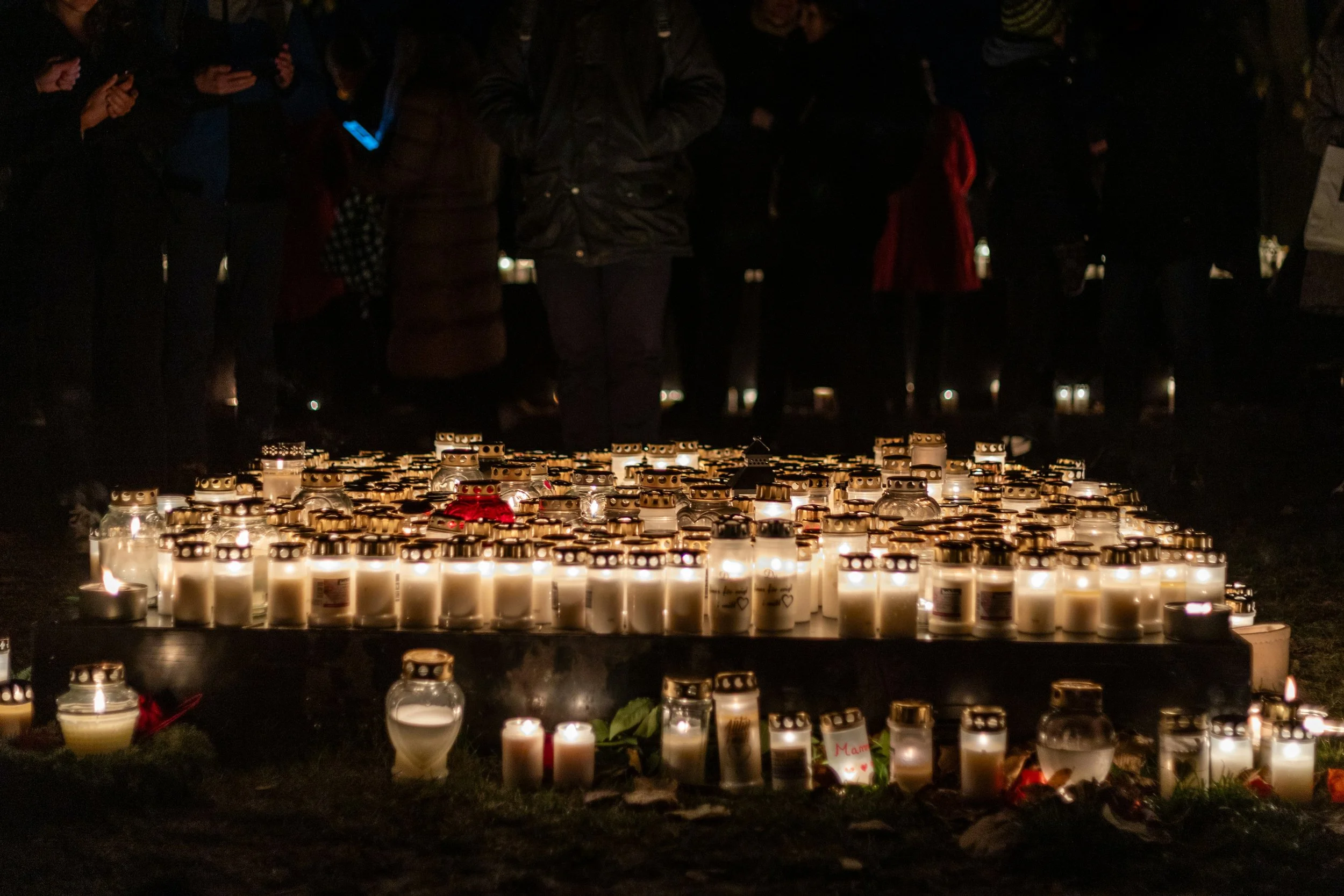
How does your tradition pay homage to those who have left us? How do you acknowledge the thin veil of the late October early November time of the year?
Halloween for my interfaith family is an opportunity to think about who or what we remember as role models, and how we bring kindness and mirth into our transition between summer and winter seasons. Contemplations about the inevitability of death provide moments of pause as the leaves change color and fall to the ground. We talk about the layer of warmth and protection those dead leaves provide for animals and insects through the cold winter months and the possibility of rebirth and rejuvenation when the light returns in spring.
Personally, I appreciate the moments to contemplate the perception of a thin barrier between the living realm and the spirit realm. For me, it is an acknowledgment of the excitement of possibility and imagination—can we see or interact with those who have left us? Are there messages from our ancestors that could provide meaning or direction to our lives? I love to talk with my parents and my sisters about their experiences that provide a sense of wonder, awe, and magic at this time of year. This attentiveness creates connection between those of us in this realm and an appreciation of each other’s stories. I feel inspired and held by community as we head into the cycle of quiet winter reverence.
Perhaps the significance of the season lies not simply in fascination with costumes, candy, ghosts, and things that go bump in the night, but in how communities make sense of grief and loss, remember those who impacted our lives, and imagine our own relationship with or between life and death.
What might change in our lives if we took more time to consider how our own spiritual traditions remember the dead? Or if we considered another tradition’s rituals around death with curiosity rather than fear?